
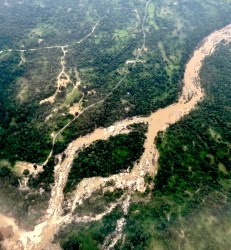
Ranchi, Jharkhand….Subarnarekha River ‘Streak of Gold”.
Visits to home country are often replete with glamour and drama and this time we added some pizzazz (September 2025) when we zip-zap-zoomed across four cities in four states on whimsical ‘flights of reconnection.’ It was exceptional as normally we plan before boarding flights but here we were banking on relative-hospitality and flights of fancy. There was no checking on sites to see or things to do but only a random desire to escape New Delhi’s increasing pollution levels.
Reconnecting: Re-connecting has its own charm or I should say advantages as the trip exposed us to the uniqueness of four different regions, its people and their habitats. On face value most cities morph into extensions of each other with brick and mortar facades of houses, apartments, commercial complexes plastered into an invisible togetherness. One could be anywhere… Ranchi, Mumbai or New Delhi, Allahabad or Vadodra. The standalones are the crumbling heritage buildings propped up to represent the fading glory of the region.
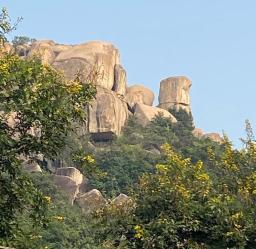
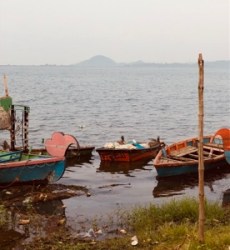
Ranchi, Jharkhand. Our first city of call is Ranchi, the capital of the newly minted Jharkhand state carved out of Bihar in North East India and aggressively trying to get out of its tribal skin.
We catch the morning flight from New Delhi and within 2 hours are circling over verdant green landscape, the dense green cover stretching across the Chota Nagpur Plateau with the Subarnarekha River sneaking through it. Later I learn that the river is referred to as ‘Streak of Gold’ as gold was mined near its origin at a village named Piskaa close to Ranchi. According to legend traces of gold were found in the riverbed and even now people try their luck scrounging the sandy beds. I too would not mind doing the same.
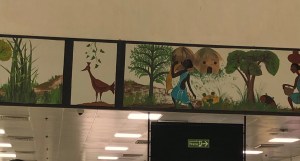
The Birsa Munda airport, named after tribal chieftain Birsa Munda who fought colonial powers for right to his land, comes across as a freshly minted, neat and clean airport jelling with the simplicity of the locals. The State knows there is a lot of catching up to do, to keep up with upwardly mobile cousins across their boundaries.
Once out of the airport it is any Indian city with similar layman’s abodes and commercial complexes and high rises.
One and only place on ‘to do list’ was BITS or Birla Institute of Technology Mesra my husband’s college (1972). He was all excited to visiting it after 50 years. Throughout the drive we listened to his hostel tales and stories of favourite haunts. His eagerness turned into disappointment as the environs had changed. The impressive basic structure is intact so are the green spaces but what seemed an anomaly were the student hostels flaunting their clotheslines in the balconies. Students probably think natural sunlight is a better dryer than mechanical ones. I was tempted to take photographs but desisted as I did not want to tarnish the old preserved college day images. We followed husband around the main administrative block peeping into lecture rooms with prospective engineers, pharmacists and space engineers. Alma mater is Alma mater and memories persist of time spent there…good or bad.
The airport neatness does not carry over into the city that is overflowing with vehicles and cattle, narrow roads adding to the melee. The redeeming factor is the lush greenery, probably because of the extended monsoon. According to one popular tale, Thomas Wilkinson, a British captain, choose Archi (an Oraon tribal village) as headquarters. Archi means bamboo forest in local Nagpuri dialect and later it turned in Ranchi.
Another reason for my inquisitiveness about the city was that during childhood the city became associated with mental illness. I must be four or five years old and remember grandmother accompanying the youngest uncle to the Central Istitute of Psychiatry, a premier institution for mental health in India built during British period. Uncle had taken a fall from his terrace and this affected his brain. Though he and grandmother stayed at the Centre for months there was only a slight improvement and back home he carried on as best as he could.
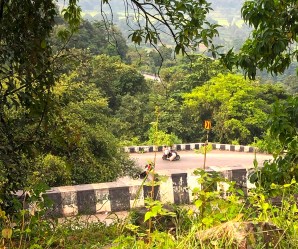
Things to do and see: Abundant waterfalls and verdant natural vegetation has earned Ranchi the sobriquet ‘City of Waterfalls’ . Three days is too short a time to trek the popular sights…, Hundru Falls, Dassam Falls, Jonah or Gautamdhara Falls ( dedicated to Gautam Buddha), the Kanke or Gonda Dam built in 1955. Close to Kanke is the Rock Garden. We drove the hairpin band around the green hills, towards Patratu Valley for its lake and the picturesque view of the city. Natural beauty takes backstage as the more popular a place the more crowds and more garbage. Responsible tourism is a major issue as with the crowds come the accompanying problems…plastic everywhere, no sense of hygiene etc. .
We were not interested in a temple run but for religiously inclined there a few worth visiting…Sun temple, Jagannath Temple, Pahari Mandir. The city offers natural and man made sites such as Bhagwan Birsa Biological Park, Getalsud or Rukka Dam built in 1971; the oldest church the Gossner Evangelical Lutheran Church; the St Mary’s Church constructed in 1847; the Ranchi Science Centre and Ranchi State Museum…. The list is endless.
Regional handicrafts…..intricately woven bamboo products, Paitkar paintings and silk products. I picked up Moga silk jackets (gifting) and dress material. Saris are exquisite but unfortunately I have given up wearing saris. I did try out local food such as Littie- Chokha, a flavourful rustic dish prepared with dough balls filled with roasted gram flour ( sattu) and vegetable mixture (chokha). There is also Dhuska, a deep fried pancake made from fermented and lentil batter, and Chilka Roti a traditional pancake prepared with rice flour and split chickpeas served with chutney, vegetables or meat. Not to be missed out a regional favourite Sattu Paratha.
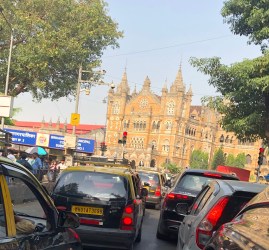
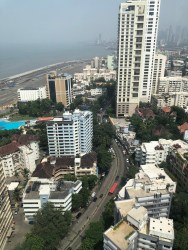
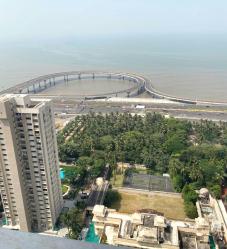
Mumbai, Maharashtra: Bidding adieu to tribal land we wing our way to Mumbai, cutting across the Central Plateau to the city by the Arabian sea. This must be my 6th/7th visit across years and Mumbai is still on my love/hate list. I love it for the vibrancy, the newness, the aliveness and avoid it for the filth, the crowds, the continuous push and shove to reach top of ladder.
A pleasant two plus hour flight with mostly Gulf returnees on way to a Gulf country. There was one excited three year old ‘Nawab’ dressed to the hilt probably going to meet with his Abbu or father in Bahrain. I had forgotten that Mumbai is a humungous airport and the walking one has to do. Mental tick to book a wheelchair for next visit. Trudged along till reaching the exit and meeting up with nephew.
The drive to Thane City, 40 km from Mumbai, a city within a city, is a trundle past suspected landmarks… crowded streets blocked with trucks, buses, two/three wheelers re-confirming my thoughts on this pre colonial village of concrete, filth and movement camouflaged in a glitter that is at once evanescent, fleeting, fugitive, momentary, transient. Scratch the surface and reality peeps through the neon lit sky scrapers. Later we would do the rounds of the ubiquitous landmarks….Antilla, the nose-in -the-air Ambani home; the Queen’s Necklace or Marine Drive; Juhu, Bandra, the ever present Hanging Gardens; the newly constructed Coastal Road making journey to Marine Drive smooth, the modern bits of the city. A friend whom we met in his 25th floor apartment overlooking the Arabian Sea commented on the progress and newer constructions. I was curious to know what was being done about the slum clusters and filth along the rail tracks, under flyovers, the street dwellers and beggars. His reply that “it is easy to change what is being constructed but not what is already there”. Probably he is right as habits and mindsets are entrenched and this ‘City of Dreams’ will forever stay in the same slum-y slot as no matter what the public thinks or wants a handful control the core of the city. One cannot imagine Mumbai without its dream-chasers and executors, ‘an unavoidable blob’ who stream into this city in thousands as they too want to play the roulette of luck.
Mumbai developed into a major trading port in the late 1600s and as New York Times says “is still in the midst of a restless, unpredictable adolescence” in reference to the virulent, joyful, chaotic energy that keeps it hurtling perpetually into the future. The reason….a continuous stream of Indians and outsiders are rushing in…some succeed while others fail but still hang on to the strings of hope. The suburban trains are the best examples to watch this surging mass. One wonders what is the attraction of this city when rest of India is listlessly waiting.
A chequered history from a local hinterland to Portuguese occupation to handing over to the British as marriage largesse reflects the changing patterns. Looking at the looming majestic Gateway of India through which the British had entered the city commemorating their victory and possession in 1924 one can imagine the feeling of awe of destiny. Over the years others followed and so did the terrorists in 2013 who laid siege to the iconic Taj Mahal Hotel on the sea face. But unlike the British they did not succeed.
One constant major attraction, over decades, is the Bollywood film industry. Stories of dreamers ready to sacrifice, to be seen on the silver screen as the next shining star is an encouragement for the continuous boundary crossers.
To me Mumbai is a melange of diversity…..people, language, customs, modernity and tradition, wealth and poverty, glitz and glamour of mansions with footpath abodes. People live and love the contrasts and to us from a relatively streamlined Delhi this needs application of patience and acceptance. When in city I too succumb to its vibrant charms and at some time in the near future need to stay longer to let this all consuming energy fill my pores.
We bid adieu to friends and family, all die hard Mumbaikars who refuse to see beyond the Western Ghats. This visit presented a keepsake memory in form of a kick back for thinking ill of the city. While walking the uneven pavement on Nepean Sea Road, searching for the cafe where we were meeting with friends, one misjudged step and I was flat on my nose. A bloodied nose is not a very attractive site but was surprised at the genuine concern of bystanders and shop owners who came rushing, calling out to my husband a few steps ahead and pushing cold water bottles at me. The warmth and helping attitude changed my view of Mumbai and its people. In North India, Delhi to be precise, there would have been more selfie takers of my fall than concern about me. Thankfully there were no broken bones, only a slight hump on my nose…a reminder of my encounter with Mumbai life.
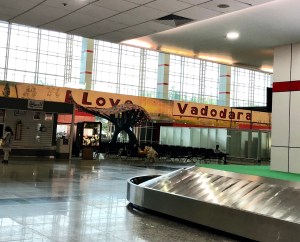
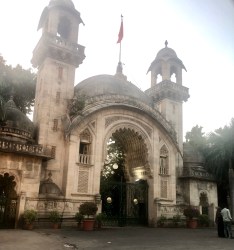
Vadodra, Gujarat: Another city and another State. We land in Vadodra (Baroda) early morning after a relaxing and entertaining one hour flight. My next seat companion turned out to be an Allahabadi (from my native city )but settled in Noida near Delhi. Being in the wellness industry she came out with essential oils and millet parathas (bread), all health inducing condiments. A media person she regaled us with anecdotes of film and political personalities she had interviewed for some television channel. Our wellness tryst came to an end as she was proceeding on to Delhi and we were disembarking in Vadodra.
We step into a different city and a different setup, the third stop on our four cities escapade. This was my first visit to Gujarat and I was expecting a khakra-esuqe welcome…crisp and spicy. It was bland, as I did not feel the difference between the two states Gujarat and Maharashtra. I presume they exist in each others pockets. Probably the Gujaratis and Marathis would not agree but to me they appear two sides of same coin…. something similar to Delhi and Uttar Pradesh or Delhi and Punjab. The Indian states were formed on the basis of language and customs but now with constant and continuous intermingling, placement and displacement, on face value the cities appear similar except when political issues take centre stage.
Vadodra is referred to as the Cultural City of India (Sanskrutik Nagari) due to its significant history and achievements in arts and architecture under the Gaekwad rulers (the famous South Indian painter Raja Ravi Varma was artist in residence), traditional wooden handicrafts, delicious street food, and the supposedly historic underground drainage system.
We preferred driving around seeing the important landmarks instead of stepping inside any. One place I wanted to explore was the Laxmi Villas Palace. Unfortunately we were late on Sunday, closing time is 5 pm and Monday was off day and we were leaving on Tuesday. No amount of cajoling, pleading moved the gaurds as they refused to let us take photographs from outside the closed gate. The reason ….the Palace is the residence of the Gaekwad royal family, stands out for its opulence as one of the largest private residences in the world, and they were doing their duty. Denied entry I googled the details and learn that the Palace was styled on the Indo Saracenic Revival architecture ( sounded impressive as I would have to google that also) and was constructed in 1890, at the cost of £180,000 by Maharaja Sayajirao Gaekwad III, blending Indian tradition with European modernity. The Palace compound stretches over 500 acres housing a number of buildings, particularly the LVP Banquets & Conventions, and the Maharaja Fateh Singh Musuem building. We could see the extensive golf course created by Maharajah Pratapsino in 1930s for his European guests and was opened to the public in 1990s by his grandson Samarjitsinh.
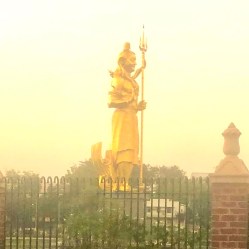
To compensate for the ‘no entry’ we drove into the neighbouring crowded bazar to have a look at the towering gold plated 111 feet tall Shiva gold statue standing tall in the middle of a man-made Sursagar lake or Chand Tao located in centre of the city. Appeared intimidating and it sure was with the surging crowds around the periphery. Being a Saturday and shopping time our vehicle crawled making us change our decision of getting down to see the statue up close. The view from the car was sufficient. The statue’s construction had begun in 1996 and finished in 2002. It was gilded in 2023 using 17.5 kilograms of gold.
Places to see: Museums and gardens such as the Vadodara Museum and Picture Gallery and the Maharaja Fatehsingh Museum housing art and royal exhibits and the Tambekar Wada offering an insight into the city’s past. Vadodra is known for its intricately carved wooden furniture, statues, and decorative items that showcase the region’s cultural richness. I read about Vadodra being the only city in India to have an underground drainage system as early as 1894, a testament to its advanced infrastructure during the Gaekwad era. Well, I could not confirm this information. Other places to see includes the Sayaji Baug (Kamati Baug) a popular garden of the city.
Food: We dined out in the popular ‘Mandap’ and enjoyed the thali with its array of dishes and veggies. Another must try is the street food like sev usal, fafda, dhokla.
I had been told about the popular Baroda textiles but a friend in Ahmedabad told me that ‘you have got your information wrong. It is Ahmedabad and Surat for textiles. Anyways you get much better textiles in Delhi’. I was disappointed but picked up a few prints as keepsake. Regret not picking up a few craft items.
Prayagraj, Uttar Pradesh: Back on the plane for the last or fourth stop…laidback Prayagraj or Allahabad, my hometown ‘where the past never truly leaves’. The moment I stepped out of the airport, I could almost smell the decades… childhood, adulthood, the ambitions and dreams, the successes and failures, friendships and enmities, the love and warmth of the hearth and heart. No matter which corner of the earth you set base in the old never leaves you, memories cling on even though the city is not anymore your childhood playground.
The name change from Allahabad to Prayagraj did not change its internal core though externally it is cloaked in the Hindutva robe. To my generation it will always be Allahabad, the city of the gods and sacred rivers, Akbar’s Fort on Yamuna bank, the Anand Bhawan (Indira Gandhi Nehru’s home), Khushru Bagh.. a Mughal era relic of cultural and historical significance reflecting the architecture of Mughal era and other minor and major significant historical landmarks.
The new Allahabad, as we still refer to home city by its old name, has acquired a new veneer but cannot hide the old completely. The Maha Kumbh Mela of 2024 altered the demographics of the city, with the airport and the roads revamped and fancier commercial complexes. To my comment as ‘won’t everything be back to old after sometime’, our cab driver from airport to home retorted that “ it is the responsibility of citizens to maintain as the Government can do this much”. I was impressed at this tone change as previously the blame would be dumped on the government.
Allahabad has changed, more crowded with colonial palatial houses have all but disappeared and replaced with condominiums and commercial complexes. Our family home is a sprawling commercial complex. Institutions and habits are changing but to the residents their city is inching its way to be one of the Smart cities as envisioned by the present government.
Nostalgia made me pick up THE LONELINESS OF SONIA AND SUNNY by Kiran Desai set against the canvas of my home city. Desai captures the essence of small town India, the lifestyle. I have vague memories of her grandparents house across from our school St Mary’s Convent and a relative being in the same class with me.
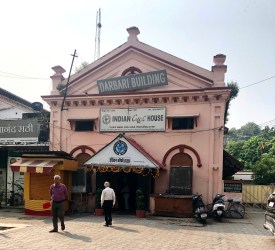
This trip was more of celebrating Diwali festival with my brother, the only one having stayed back in town, and meeting with few remaining school and college friends. It was a dose or shot of rigour of listening to past and eating home cooked food, the old tastes lingering as time stood still. The highlight was visit to India Coffee House, a popular and a significant landmark and a legacy of the popular Indian Coffee House chain established in 1957. Somehow while living and studying in Allahabad I had never ventured inside as it was a bastion of student and political leaders, a lawyers den. Ladies were allowed in the family rooms. So this visit was my first entry into the main area for coffee and the famous chicken sandwiches. It was around 11 a.m. and few customers. I tried to imagine the bustling premises echoing with political and legal debates.
Past is past and no matter how much one tries to reconstruct or relive it is the present that matters.
The fourteen day trip across cities and states was loaded with experiences, memories and carry forwards.


2 responses to “FOUR CITIES…FOUR STATES”
A lovely read. Even in 90’s the Indian Coffee House kept it’s charm and was one of the favourites among students.
Thank you